



Mobile App Security Maturity Self-Assessment: Where Does Your Enterprise Really Stand?
Benchmark your mobile application security against industry leaders.
Why this assessment is different
Security leaders see no shortage of checklists. Most reiterate what you already know: mobile security is complex, and gaps exist.
It’s built on insights derived from over 10 million real-world mobile security evaluations, reflecting how mobile applications are actually built, tested, and attacked in production environments.
Rather than asking theoretical questions, the assessment benchmarks your program against the practices used by organizations with mature, scalable mobile security programs, not aspirational frameworks.
“How mature is our mobile security posture compared to our peers?”
In under 15 minutes, you’ll gain:
- A clear view of where your mobile security stands today
- Context on how your approach compares across the industry
- Practical guidance on what to prioritize next based on your maturity level
The goal isn’t to overwhelm you. It’s to replace uncertainty with clarity.


Your mobile security reality check
Most enterprises believe they have mobile security under control.
The data tells a different story.
Across millions of real-world mobile security assessments, three patterns consistently emerge:
Mobile attack surfaces are growing faster than security coverage.
Even large enterprises with mature AppSec programs struggle to maintain visibility across mobile apps, APIs, and third-party SDKs.
Attackers have shifted to mobile-first entry points.
Orphaned apps are silently compromising sensitive data.
Traditional AppSec tools leave mobile-specific gaps.
Managing security across multiple stores is a never-ending struggle for even the largest teams.
This assessment helps you cut through assumptions and measure what actually matters.
How this assessment works
- Answer honestly: The insights depend on accurately reflecting your current controls and processes—not what you're planning to implement next quarter.
- Section-wise evaluation: Each section covers critical mobile security domains that industry leaders prioritize.
- Calculate your maturity level: Use our scoring framework to see how you compare against mobile security benchmarks.
- Get actionable next steps: Receive specific recommendations based on your current maturity level and gaps.

Mobile app security architecture & design
The foundational mobile application security architecture
Why this matters
Mobile applications have fundamentally different security requirements than web applications. Organizations that treat mobile as "web with a different interface" create systemic vulnerabilities that traditional security tools can't detect.
| Question | Yes | No | Partial | |
| 01 | Do you follow documented mobile app security design guidelines aligned with OWASP MASVS? | |||
| 02 | Is authentication enforced server-side, minimizing reliance on client-side controls? | |||
| 03 | Do you track and manage third-party SDKs’ security risks, including SBOM inventory? | |||
| 04 | Is biometric authentication implemented with hardware-backed key storage? | |||
| 05 | Are session management practices designed to prevent token replay and fixation? |
Security testing & automation
Are you actually testing mobile applications the way attackers actually attack them?
Critical insight
Mobile applications have fundamentally different security requirements than web applications. Organizations that treat mobile as "web with a different interface" create systemic vulnerabilities that traditional security tools can't detect.
| Question | Yes | No | Partial | |
| 06 | Do you perform automated static (SAST) and dynamic (DAST) scans on Android and iOS apps? | |||
| 07 | Is penetration testing (manual/automated) integrated into your CI/CD pipeline? | |||
| 08 | Are MASVS-AUTH compliance requirements regularly validated with reports? | |||
| 09 | Are test results integrated with developer workflows for quick remediation? | |||
| 10 | Does your testing include real-device assessments exposing hardware-specific vulnerabilities? |
Risk-Based Application Security Posture Management (ASPM)
Can you actually prioritize mobile security risks based on business impact?
Why ASPM?
Traditional vulnerability management treats every "critical" finding equally. ASPM helps you focus on the 5% of vulnerabilities that pose actual business risk while automating away the 95% that don't.
| Question | Yes | No | Partial | |
| 11 | Do you perform automated static (SAST) and dynamic (DAST) scans on Android and iOS apps? | |||
| 12 | Is penetration testing (manual/automated) integrated into your CI/CD pipeline? | |||
| 13 | Are MASVS-AUTH compliance requirements regularly validated with reports? | |||
| 14 | Are test results integrated with developer workflows for quick remediation? | |||
| 15 | Does your testing include real-device assessments exposing hardware-specific vulnerabilities? |
Governance, compliance & reporting
Is mobile security integrated into how your organization operates?
What makes industry leaders stand out?
Mobile security isn't a technical problem; it's an organizational capability. The most secure organizations treat mobile security as core business infrastructure, not an IT afterthought.
| Question | Yes | No | Partial | |
| 16 | Do you have executive-backed mobile app security policies embedded in your SDLC? | |||
| 17 | Are regular risk assessments conducted with all relevant stakeholders involved? | |||
| 18 | Is a complete inventory of mobile apps maintained with clear security ownership? | |||
| 19 | Are incident response plans established specifically for mobile security breaches? | |||
| 20 | Do developers and QA teams receive ongoing security training focused on mobile threats? |
Your Mobile Security Maturity Score
Scoring: Yes = 4 points | Partial = 2 points | No = 0 points
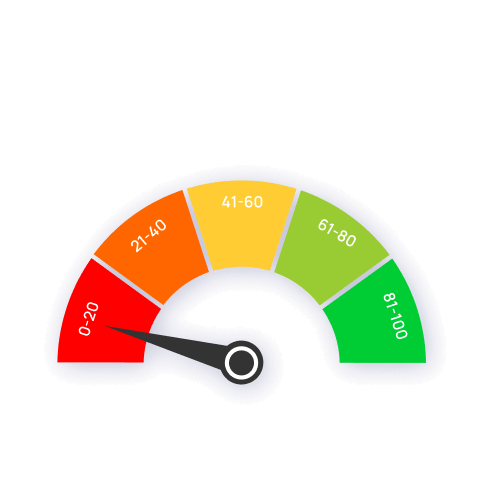
| Total score | Maturity level | Reality check | What this means for your business |
| 0 – 20 | Reactive | Security is manual and inconsistent. Mobile threats pose significant business risk. | Critical gap: Immediate investment needed to prevent mobile security incidents that could impact business operations. |
| 21 – 40 | Developing |
Some automated testing exists, but lacks mobile-specific approaches and integration. | Opportunity: Building toward industry standard practices, but competitors with mature mobile security may have advantage. |
| 41 – 60 | Practicing | Integrated testing with early ASPM adoption, but incomplete mobile coverage. | Progress: Above average security posture, but gaps remain in mobile-specific protections and automation. |
| 61 – 80 | Advanced | Mature workflows with strong automation and mobile-native security practices. | Competitive advantage: Security capabilities that differentiate in enterprise sales and enable faster growth. |
| 81 – 100 | Leading | Proactive, AI-driven mobile security with predictive threat management. | Industry leadership: Security infrastructure that enables business acceleration rather than creating friction. |
What your score really means (and what to do about it)
If you're reactive (0-20):
Start with foundations
Your immediate priority
Establish basic mobile security controls before a preventable incident impacts business operations.
Key actions
- Implement OWASP MASVS baseline controls
- Begin automated security scanning for mobile applications
- Establish server-side authentication enforcement
- Create a mobile app inventory with security ownership
Timeline
3-6 months to reach ‘Developing’ level
IIf you're developing (21-40): Build
integration and automation
Your focus
Transform ad-hoc security activities into systematic, integrated processes.
Key actions
- Integrate security testing into CI/CD pipelines
- Implement basic ASPM capabilities for vulnerability management
- Begin real-device testing to replace emulator-only approaches
- Establish formal mobile security training for development teams
Timeline
6-12 months to reach ‘Practicing’ level

If you're practicing (41-60):
Optimize for business impact
Your opportunity
Move from compliance-driven to business-value-driven mobile security.
Key actions
- Deploy a comprehensive mobile-native ASPM platform
- Implement AI-driven vulnerability prioritization
- Establish continuous compliance monitoring
- Create executive-level security reporting and governance
Timeline
9-15 months to reach ‘Advanced’ level

If you're advanced (61-80): Drive competitive advantage
Your position
Mobile security as a business differentiator and growth enabler.
Key actions
- Implement predictive threat intelligence and proactive monitoring
- Optimize remediation workflows with AI-powered guidance
- Establish industry leadership through security innovation
- Create security capabilities that enable new business opportunities
Timeline
12-18 months to reach ‘Leading’ level

The mobile security that's costing you business
Here's what most security assessments miss: Mobile security maturity directly impacts business outcomes.
- 40% faster time-to-market for mobile applications
- 60% reduction in security-related development delays
- 75% fewer compliance audit issues
- Higher win rates in enterprise sales where security is evaluated
However, organizations with reactive mobile security face:
- The average breach costs are $4.45 million when mobile applications are compromised
- Lost enterprise deals due to inadequate security demonstrations
- Developer productivity losses from manual security processes
- Regulatory penalties for mobile data protection failures
The difference isn't just security—it's competitive positioning.

Why Appknox built mobile-native ASPM
Most security platforms retrofit web application thinking for mobile. That creates fundamental blind spots.
Appknox designed the only ASPM platform built specifically for mobile-first enterprises with:
- Real-device testing infrastructure that captures vulnerabilities that simulator-based tools miss entirely.
- Mobile SDK threat intelligence with continuous monitoring across app stores and mobile ecosystems.
- AI-powered risk prioritization based on analysis of over 10 million mobile security assessments.
- Integrated compliance automation for regulations that specifically impact mobile applications and data handling.
- Developer-friendly remediation with mobile framework-specific guidance that teams can implement immediately.
Your next move
Based on your assessment score, here's how to accelerate your mobile security maturity:
Ready to see where you stand? Complete this assessment in under 15 minutes and get personalized recommendations for advancing your mobile security capabilities.
Want to see how industry leaders approach mobile security? Discover how Appknox's mobile-native ASPM platform enables organizations to build scalable security advantages that grow with their business.
Curious about the gap between your current state and mobile security leadership? Book a demo to see how real-device testing, AI-powered prioritization, and automated compliance monitoring transform enterprise mobile security from cost center to competitive advantage.